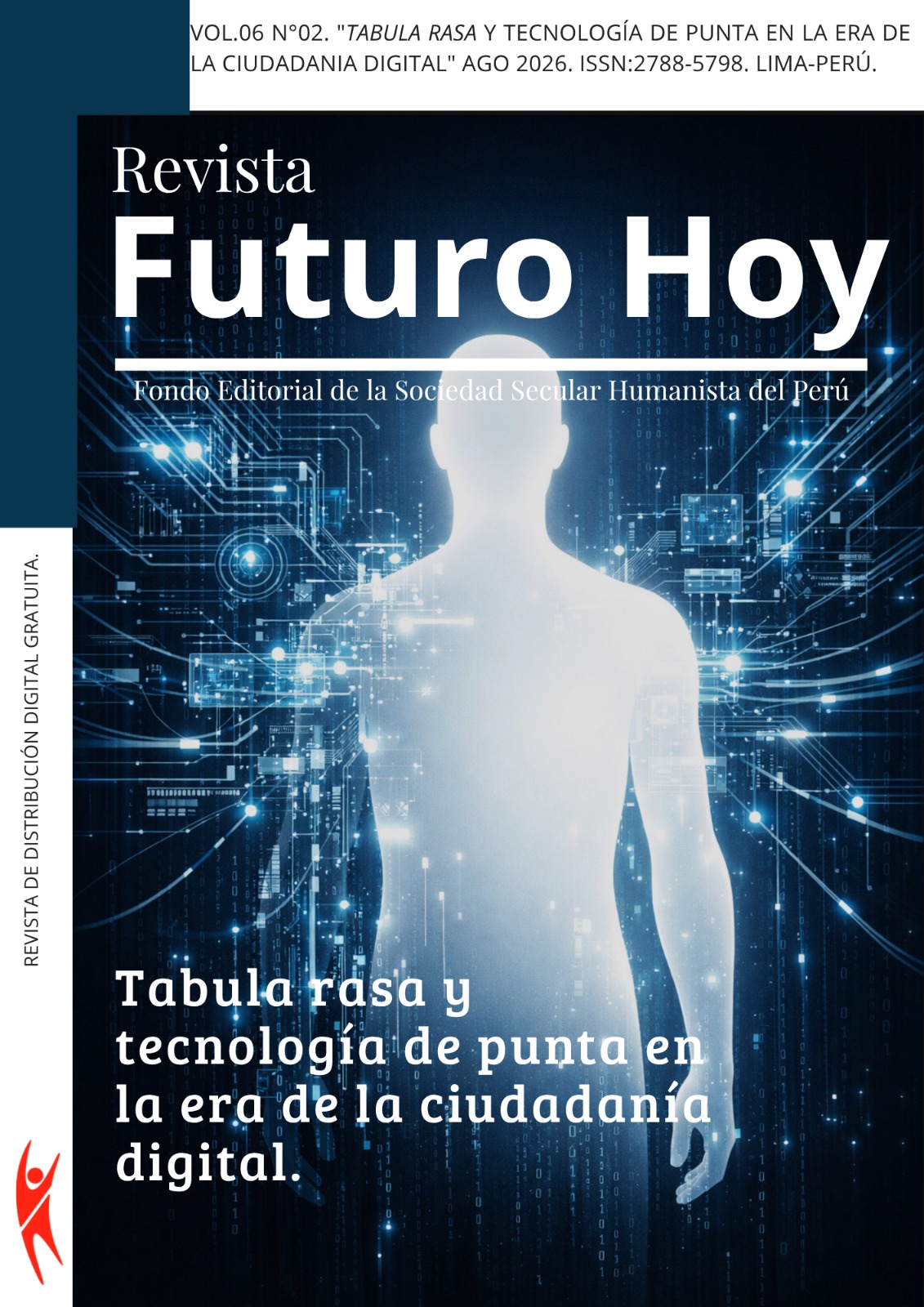
¿La revolución tecnológica nos está apagando el pensamiento crítico? Lo que dice la neurociencia sobre el cerebro digital
Palabras clave:
neuroplasticidad, alfabetización digital, pensamiento crítico, ciudadanía digitalResumen
La revolución digital de las últimas tres décadas ha transformado profundamente el funcionamiento cerebral, el comportamiento y las relaciones sociales del ser humano, planteando una pregunta central: ¿puede el acceso constante a la tecnología reducir nuestra mente a una tabula rasa, o es posible cultivar una alfabetización digital consciente que preserve el pensamiento crítico? A partir de evidencia científica reciente en neurociencia y psicología, este ensayo examina tanto los costos, atención reducida, menor inteligencia social y emocional, aislamiento social y alteraciones del sueño, como los beneficios, mayor activación neural en usuarios expertos, incremento de la integridad de la sustancia blanca, mejoras en la memoria, la multitarea y la inteligencia fluida, y beneficios psicológicos en personas mayores, asociados al uso de la tecnología digital. Se concluye que la clave no reside en la cantidad de tecnología utilizada, sino en el modo y el propósito de su uso: un uso consciente y dirigido puede convertir la mente en un terreno fértil para el pensamiento crítico, en lugar de reducirla a una tabula rasa.
Descargas
Citas
Andreassen, C. S., Billieux, J., Griffiths, M. D., Kuss, D. J., Demetrovics, Z., Mazzoni, E., & Pallesen, S. (2016). The relationship between addictive use of social media and video games and symptoms of psychiatric disorders: A large-scale cross-sectional study. Psychology of Addictive Behaviors, 30(2), 252–262. https://doi.org/10.1037/adb0000160
Anguera, J. A., Boccanfuso, J., Rintoul, J. L., Al-Hashimi, O., Faraji, F., Janowich, J., Kong, E., Larraburo, Y., Rolle, C., Johnston, E., & Gazzaley, A. (2013). Video game training enhances cognitive control in older adults. Nature, 501(7465), 97–101. https://doi.org/10.1038/nature12486
Cheung, C. H. M., Bedford, R., Saez De Urabain, I. R., Karmiloff-Smith, A., & Smith, T. J. (2017). Daily touchscreen use in infants and toddlers is associated with reduced sleep and delayed sleep onset. Scientific Reports, 7, 46104. https://doi.org/10.1038/srep46104
Dong, G., Li, H., & Potenza, M. N. (2017). Short-term internet-search training is associated with increased fractional anisotropy in the superior longitudinal fasciculus in the parietal lobe. Frontiers in Neuroscience, 11, 372. https://doi.org/10.3389/fnins.2017.00372
Giedd, J. N. (2020). Adolescent brain and the natural allure of digital media. Dialogues in Clinical Neuroscience, 22(2), 127–135. https://doi.org/10.31887/DCNS.2020.22.2/jgiedd
Hoehe, M. R., & Thibaut, F. (2020). Going digital: How technology use may influence human brains and behavior. Dialogues in Clinical Neuroscience, 22(2), 93–97. https://doi.org/10.31887/DCNS.2020.22.2/mhoehe
Jaeggi, S. M., Buschkuehl, M., Jonides, J., & Perrig, W. J. (2008). Improving fluid intelligence with training on working memory. Proceedings of the National Academy of Sciences, 105(19), 6829–6833. https://doi.org/10.1073/pnas.0801268105
Korte, M. (2020). The impact of the digital revolution on human brain and behavior: Where do we stand? Dialogues in Clinical Neuroscience, 22(2), 101–111.
Lai, E. R. (2011). Critical thinking: A literature review (Research Report). Pearson.
Miller, K. J., Dye, R. V., Kim, J., Jennings, J. L., O'Toole, E., Wong, J., & Siddarth, P. (2013). Effect of a computerized brain exercise program on cognitive performance in older adults. The American Journal of Geriatric Psychiatry, 21(7), 655–663.
Nicholson, N. R. (2012). A review of social isolation: An important but underassessed condition in older adults. The Journal of Primary Prevention, 33(2–3), 137–152. https://doi.org/10.1007/s10935-012-0271-2
Shapira, N., Barak, A., & Gal, I. (2007). Promoting older adults' well-being through Internet training and use. Aging & Mental Health, 11(5), 477–484. https://doi.org/10.1080/13607860601086546
Small, G. W., Lee, J., Kaufman, A., Jalil, J., Siddarth, P., Gaddipati, H., Moody, T. D., & Bookheimer, S. Y. (2020). Brain health consequences of digital technology use. Dialogues in Clinical Neuroscience, 22(2), 179–187. https://doi.org/10.31887/DCNS.2020.22.2/gsmall
Uhls, Y. T., Michikyan, M., Morris, J., Garcia, D., Small, G. W., Zgourou, E., & Greenfield, P. M. (2014). Five days at outdoor education camp without screens improves preteen skills with nonverbal emotion cues. Computers in Human Behavior, 39, 387–392. https://doi.org/10.1016/j.chb.2014.05.036
Descargas
Publicado
Cómo citar
Número
Sección
Licencia
Derechos de autor 2026 Caterina Presutti

Esta obra está bajo una licencia internacional Creative Commons Atribución 4.0.
El autor de cada artículo o contribución académica publicada en Futuro Hoy se compromete a otorgar derechos de uso a otros gracias al registro en Creative Commons BY 4.0 que la Editorial ha tramitado para su obra. Esto permite el acceso gratuito e inmediato a la obra y permite a cualquier usuario leer, descargar, copiar, distribuir, imprimir, buscar o vincular acceder a los textos completos de los artículos, rastrearlos para indexarlos, pasarlos como datos al software o utilizarlos para cualquier otro propósito legal. Cada autor mantiene los derechos de su obra. La revista Futuro Hoy posee los derechos de publicación de cada artículo. La revista no se responsabiliza por los comentarios vertidos por cada autor.


